Paul Ryan and “libertarianism by default” — May 22, 2011

Paul Ryan and “libertarianism by default”

I’ve feared for a while that my generation would become libertarians by default: the social safety net has been so thoroughly worn down that there’s little social contract left; I fear that people expect Medicare and Social Security to be gone by the time they retire. If that’s what people expect, then they stop lobbying to strengthen Social Security and just look out for #1. Republicans, meanwhile, have never stopped trying to destroy Social Security. Current retirees will never let Social Security end, but maybe my generation will. My parents’ generation expects Social Security to be there, and many of them have pensions. My generation might well expect Social Security to die, and we all have very weak 401(k)s instead of reliable pensions. So we may not know what to lobby for, because we’re not used to having a social safety net to fall back on. We may not know what we’re missing until it’s gone. Hence libertarianism by default: the libertarianism of apathy.

This is all just speculation about what might happen, of course. This generation might turn out to be just as passionate about liberal causes as was FDR’s generation — particularly after watching several bubbles and crashes over just the last decade. Certainly *I* think that this calls out, more than ever, for more active management in the economy, and particularly for more protection against the business cycle. I think a lot of people my age think the same way. Now if only our elected representatives would stop merely trying to prevent the death of Social Security, and instead take the fight to the Republicans.

These thoughts have all been bubbling for a while. They were brought to a boil by a terrific short piece in the New Republic (via Matt Yglesias). Well worth your time.

Book-review capsules, April 18, 2011 edition — April 18, 2011

Book-review capsules, April 18, 2011 edition

Attention conservation notice: reviews of a few books I’ve read recently, in lieu of the full reviews that they all deserve.

  • Nicholas Riasanovsky and Mark Steinberg, A History of Russia, 7th edition. Covers the entirety of Russian history, from the cloudy origins of Kievan Rus’ up to Vladimir Putin’s rule, and I gather that the eighth edition has even more on post-Communist Russia. Given the immense swath that this spans — Kiev, the rise of the Muscovite state, Peter the Great, Catherine the Great, all the Romanovs, the state-furthered immiseration of the serfs, the Revolution of 1917, war Communism, the 5-year plans, Stalin’s insanity, the mid-20th-century stalling of Communism under Khruschev and Brezhnev, Gorbachev, Yeltsin, and Putin — it is amazing that Riasanovsky and Steinberg can pack it all into 600-odd pages.

The book tries very hard to address all the scholarly controversy around every disputed tale of Russian history. The result is that it’s incredibly balanced, but that less-settled bits of the history are surrounded by equivocations and quantities of nuance that most of us just don’t need to know. Since the parts of Russian history that are most in doubt are the earliest parts (simply because there’s less documentation), the most boring parts of A History of Russia are at the very beginning. If you can make it through the first 150 pages or so, I think you’ll find the rest of it quite captivating. Skim if you need to.

Riasanovsky and Steinberg also, for some reason, don’t believe in footnotes. There are maybe two footnotes in the entire work, and they come at the very end; I suspect that Steinberg’s addition to the newer editions (maybe the fifth and later) led to a little bit of modernization. The lack of footnotes isn’t a huge deal, given the lengthy bibliography at the end. That bibliography could stand to be narrated, but I assume they only put the choicest works back there.

In short, this is a terrific single-volume introduction to the history of Russia, and I intend to turn it into a jumping-off point for more-focused histories.

  • William Cronon, Nature’s Metropolis: Chicago and the Great West. I mentioned a little while ago that I found it hard to express the majesty of this book. I’m still having trouble doing so, but I’ll give it a go.

Essentially William Cronon is trying to understand the connection between the city and the country. As a young tyke he always thought of the city — and Chicago was The City — as this gross agglomeration of steel and smoke and confusion, standing over the pristine, unspoiled wilderness that he and his family were driving to for vacation. Suffice to say that Nature’s Metropolis is a prolonged rebuttal of that viewpoint.

It’s more than the obvious observation that the country does the work that the city asks it to do and that the city wouldn’t eat without the country. It’s that the very way in which we understand the world, and the very means by which we eat, were transformed utterly by the city — by Chicago in particular.

Let’s look at meat in particular; it’s one of three main commodities within Nature’s Metropolis, the others being wood and wheat. Imagine the era before the railroad and before refrigeration. This was the era when ranchers would raise cows in Texas and the cowboys of myth would bring them north to be slaughtered. They had to be slaughtered near to where they were eaten, because meat spoils quickly and there was no fast way to carry the meat long distances.

The train changed all that, as it changed so much besides. Now cows could be loaded on trains and shipped north within a few days. Capitalist logic soon enough changed one part of this: it’s quite inefficient, if you’re treating a cow as a mobile store of meat, to load the entire animal on a train. Much more efficient to remove the bones and skin and eyes and load only the beef. But it would still be difficult, if not impossible, to carry a train full of beef long distances — Chicago to New York, say — without its rotting.

Hence the refrigerated train car: keep the beef cold; now you can concentrate all your meat production in one central place that can destroy animals at a vast scale, and can ship them from there to the rest of the country. This is how Chicago became meatpacker to the world; it would have been impossible without railroads. It also would have been impossible without the network of ice-refilling stations that sprang up alongside railroad tracks throughout the east. Refrigerated train cars and their ice-filling stations are associated with the names Armour and Swift.

A drastic change like this, from eating meat that your neighborhood butcher slaughtered to buying “dressed beef” destroyed thousands of miles away, doesn’t happen naturally. It took marketing and tough competition to turn Armour into a powerhouse among slaughterhouses. It required them to squeeze into new towns, undercut the existing butchers using prices that only massive capitalist enterprises could afford, and play hardball. But within a couple decades, the work had been done: we were eating meat that had been killed far away and brought to us by rail car.

The railroads, and capitalist enterprise, transformed nature and transformed farmland. Bison, you may remember, used to roam the Great West. Then the white man came. And then the railroads came; shooting bison from the train (I envision Sarah Palin, hunting from the air) became sport, and their pelts clothed women back east. There were so many bison that thousands and millions of them went to waste: the tourists would shoot them and leave their corpses to rot as the trains continued off into the hinterland. Soon enough there were no bison left, and cows came to roam the land. There’s nothing ‘natural’ about cows there; their presence is purely manmade. Or more precisely: the cow occupies what philosophers (going back to Aristotle, I believe) have called ‘second nature’. Humanity has always built its own nature atop the first, fundamental nature. (Where first nature ends is hard to pin down. Maybe all we can say is that sunlight striking earth is first nature. It’s certainly possible that everything nowadays from sunlight up to the factory is second nature.)

Capitalism utterly transforms nature in ways that would have previously been inconceivable. The train radically contracts space. The market for grain futures destroys time, in a way that’s more amazing than I would have understood before reading Cronon: grain starts as, say, “Andy’s Wheat From Indiana.” But capitalism — specifically the railroad — demands that wheat be dumped into trains in bulk. (Here I say “demands” as a shorthand for “rewards with low prices”.) So grain starts getting treated as a big, bulk, fungible fluid that gets loaded onto trains as an undifferentiated mass. Now we can talk about “wheat,” and we can ship, say, No. 1 Summer Wheat from Chicago to New York. Then we knock up the abstraction one level: we trade contracts to buy and sell wheat six months or a year from today, which is a good that doesn’t even exist yet, and not only that, it’s an abstraction of a physical thing that started as Andy’s wheat. The wheat future isn’t first nature; it at least second nature.

I’ve hardly even scratched the surface of what Nature’s Metropolis covers. It’s engaging history. It understands capitalism in the large. But at the same time, Cronon plays with noisy data from midwestern bankruptcies and funerals, because bankruptcy and death are two of the only times that people have to reveal whom they owe their debts to. And by mapping out the pattern of debts, you can learn the shape of Chicago’s hinterland. And I don’t want to slight style for a moment: William Cronon is a very, very talented writer; few people could tell such a grand story at such detail so engagingly.

Nature’s Metropolis is six different kinds of landmark. Read it now.

  • Tom Standage, The Victorian Internet: The Remarkable Story of the Telegraph and the Nineteenth Century’s On-line Pioneers. A light read, which I think I took care of in a couple hours. It’s a fun story about where the telegraph came from, with plenty of enjoyable stories along the way. For instance, the message tubes that we’re familiar with from various movies ([film: Brazil], say) came about to help speed up telegram delivery: the plurality of telegrams arrived in the central-London dispatching station and went to the stock exchange, so for a time the telegraph companies hired runners (young boys, mostly) to ferry the telegrams a few blocks. Eventually they replaced these with suction tubes, which allowed for greater throughput (as we’d call it today).

I didn’t actually know much about telegrams before I read this book. I didn’t know, for instance, that people typed them up on one side, and that people were involved in retyping the telegrams at every leg of its journey (British hinterlands to one floor of the London central exchange, relayed to a second floor of the exchange, retyped and sent along to the U.S., say). I sort of expected, without really thinking about it, that telegrams were relayed just like Internet packets are now: from the source to a router nearer the destination, to another still-nearer router, and so forth until it arrived where it was supposed to. But no; it was humans all the way, for at least a few decades.

Standage’s particular twist on the story is to view the telegraph as a forerunner in many ways of the modern Internet — even down to the particular social conventions that telegraph operators adopted. Telegraph operators of the mid-19th century were like BBS operators of the late 20th.

Having come from Nature’s Metropolis, I was expecting somewhat more out of The Victorian Internet, especially because Krugman recommended both NM and TVI in the same breath. They’re quite different books. Nature’s Metropolis wants to understand all of capitalism through the lens of a transformative technology; The Victorian Internet mostly just wants to understand the telegraph. It does so vibrantly; highly recommended.

  • Bethany McLean and Joe Nocera, All the Devils Are Here: The Hidden History of the Financial Crisis. There will surely be many books trying to understand how the financial crisis happened. This one’s angle is that the crisis of 2008-? started when the U.S. adopted the 30-year mortgage, which is to say when FDR established Fannie Mae and Freddie Mac in the 30s to create a liquid market in mortgages.

“Liquidity” is a simple word that gets widely deployed, but I’m not sure that everyone’s clear on what it means. The idea is just that — as we saw in the recent crisis — sometimes everyone in a market gets scared of everyone else in a market, and gets convinced that no one is going to pay back his debts. When that happens, the market is “illiquid”; we heard that the markets had “seized up” in late 2008. You can imagine that 30-year mortgages would be particularly illiquid: you really need to trust the person you’re loaning money to if you’re going to loan him money for 30 years. There’s the risk that he’ll default on the mortgage. There’s the risk that you’ll loan money to him at 4%, but that inflation will be consistently at 5+% over the next 30 years, and that you’ll thereby lose money on this particular mortgage. There’s the risk that the U.S. will turn into Weimar Germany over the next 30 years, and that mortgages won’t be worth the paper they’re written on.

So the 30-year fixed-rate mortgage is an entirely unnatural creature. There would be no liquid market in 30-year fixed-rate mortgages if the government didn’t intervene. McLean and Nocera tell us that, before FDR intervened, the mortgage market was entirely local: you go to your local bank, you put down 30%, and your local banker — after sizing up your character (“A man I do not trust could not get money from me on all the bonds in Christendom”) — gives you the loan. You surely couldn’t get a loan from some bank thousands of miles away on the basis of some forms you fill out. Fannie Mae and Freddie Mac agreed to buy up mortgages from local banks, so long as those mortgages met certain standards (20% downpayment, etc.). They made the market for these mortgages “liquid.” Mortgages that Fannie and Freddie were willing to buy were called “conforming loans.”

Then in the 70s came the revolution that we’re all, in one way or another, familiar with today: bankers turned all manner of financial instruments into securities. You could now buy a part of a mortgage, which would encapsulate (among other things) a bet about the borrower’s ability to pay. You could assemble many such mortgages into a security called a Collateralized Debt Obligation (or CDO). You could take out something like insurance on the CDO, which would pay you money if the mortgagee defaulted; this was called a Credit Default Swap. You could divide the mortgages within the CDO into groups called “tranches” according to how likely you thought it was that each mortgage would be paid off. And so forth. We’re unfortunately very familiar with how all of this works.

McLean and Nocera map in gruesome and depressing detail what happened next: a market in “non-conforming” loans developed, and over time it took on a life of its own. As someone said, subprime loans weren’t bought, they were sold. The story of the junk salesmen gets more and more insane, and just when you think “this thing I’m reading about is The Bubble,” it turns out that The Bubble is a second round of insanity that carried out the final coup de grâce on the world economy.

No one escapes from the story unscathed. McLean and Nocera show that every financier — most especially including Alan Greenspan — who said that the financial crisis was unforeseeable was not only dead wrong, but must also have been willfully deaf to what his advisors were telling him.

For an intro to the book, I highly recommend listening to McLean and Nocera on a few recent Planet Money episodes (
1,
2,
3). In fact, I recommend listening to everything Planet Money puts out; you should subscribe to the podcast.

P.S.: James Kwak at The Baseline Scenario expresses some doubts about the argument that a liquid national private mortgage market wouldn’t exist without government intervention.

An open letter about strengthening the social-safety net, to my Congressional representative, Mike Capuano — April 4, 2011

An open letter about strengthening the social-safety net, to my Congressional representative, Mike Capuano

(Sidebar bit of context: I voted for Mike to run against Scott Brown for the senate race when Ted Kennedy died. Had Mike won the Democratic primary rather than Martha Coakley, I’m convinced that the Commonwealth’s Senate delegation would still be 100% Democratic.)

Dear Congressman Capuano,

I see that Rep. Ryan is proposing to privatize Medicare. And I see that the GOP is trying to scare everyone into thinking that Social Security’s funding problems can only be addressed by cutting benefits for the middle class, even though the CBO says otherwise.

I have two questions about this. __First__, can you help me understand why the Democratic Party hasn’t taken hold of the narrative here? There’s a lot in the news about Social Security’s peril, but nothing about how the whole problem could be solved by eliminating the payroll-tax cap.

__Second__, and maybe more importantly: why can’t the Democrats take the fight to the Republicans? We shouldn’t be the party of fighting rearguard actions to prevent the dismantling of the social safety net; unfortunately, that’s most of what people have known us for over the last decade, at least, with the notable and terrific exception of the Affordable Care Act. (Here’s hoping it gets implemented.) Under President Bush, we were known as the party that fought successfully against privatizing Social Security. I’m glad we pulled that off, but why couldn’t we have taken the fight to them? Not only will Social Security not be dismantled, but it will be *strengthened*, so that it provides the sort of retirement that we need, and functions as a real pension for those of modest to average means? In the wake of Enron, everyone was aware — or could have been made aware through the use of that one vivid example — that 401(k)s are no substitute for a real defined-benefit retirement plan.

As for Medicare and Medicaid: we have all the facts on our side; why can’t we fight? Why can’t we bring Medicare to everyone, not just the aged (and some exceptions like those with end-stage renal disease)? Why can’t we show the American people that Medicare’s rate of cost growth is lower than that of private health care? Why must we settle for *not letting the Republicans destroy it?*

A robust Democratic party — the party I want to belong to — would fight these fights, not only because they’re just, but also because we have the facts on our side. And the story doesn’t seem hard to sell. During the fight over the Affordable Care Act, many were concerned that the elderly would fight the bill because they thought it would mean gutting their Medicare. So wouldn’t the simplest bill, with the most easily understood PR, have been one that simply extended Medicare to those under 65? This bill would have had the virtue of being *the best* bill, as well.

To some extent I know I’m preaching to the choir, both because you’re a very progressive representative and because the Senate is the problem more than the House; the Senate seems to be where progressive legislation goes to die. If the Senate is the problem, and the public decisively wants a stronger safety net (and I’d be *shocked* if, when asked whether Medicare ought to be extended to all Americans regardless of age or income, Americans said no), I want the Democrats out there every day saying that the Senate is standing in the way of the people’s will. I want “procedural reform” on everyone’s lips.

In short, I want some fight in my party. And unless this is a case of media misrepresentation, I just don’t see that fight.

Having now laid out a largely negative case, I need to explain that beneath it all is a very positive question: what do I, as a resident of the nation’s most reliably blue state, do to fight for a Democratic party that’s worth fighting for?

With respect,
Steve Laniel

A realization about writing and programming — March 29, 2011

A realization about writing and programming

Level-zero programmers obsess over essentially unimportant details of programming: whether you should write blocks like

void someFunction(void) {
printf “Yesn”;
}

or like

void someFunction(void)
{
printf “Yesn”;
}

, for instance, or whether to use vim or emacs to edit your code. These are unimportant for at least a couple reasons. First, you can solve these sorts of style problems in an entirely automated way. Second, there are many, many things that are more important than these sort of nits; they don’t even really impact your code’s readability, for one. These details don’t even count as ‘style’. They’re purely mechanical.

A level-zero English-language writer pays attention to Strunk & White. What’s odd about Strunk & White is that, far from being about The Elements of Style like its name suggests, it’s really The Elements of Grammar. True, grammar does matter. Inasmuch as “style” means “writing to appeal to your audience,” and inasmuch as your audience cares about little grammar nits, grammar is important. Grammar, in this view, is arbitrary but important. It’s like the location of the silverware at dinner, or like not chewing with your mouth full: it’s an arbitrary convention that certain groups of people pay attention to. It’s a class identifier. Using “whom” properly, or not ending a sentence with a preposition, is a class identifier. It’s a way to signal to people of your class that you’re one of them. Others will completely miss the signal, which doesn’t make them rubes; it just means that they don’t subscribe to your particular class signals. So call it Elements of Writing For The Wealthy, perhaps.

But even with that caveat out of the way, and even if you don’t agree with Language Log that Strunk & White is a pile of trash, it’s still the case that The Elements of Style is wildly, comically unimportant to the act of writing readable text. Whether you use “whom” properly (and I’m a dues-paying member of the Whom-Using Board Of Pedants) has practically nothing to do with whether people will read your writing all the way through to the end.

Grammar is important to get you off the ground, in a certain sense. Works riddled with typos are often hard to get through. Using commas where you mean to use semicolons will sound wrong in your reader’s ear if he’s trained to read them that way (so again, the rule “know your audience” is logically prior to the rule “use punctuation properly”).

But that’s just the point: this is level-zero stuff. These are the rules you pay attention to because they’re rote and mechanical, and thereby easier to remember and implement than “grab your reader with a good hook” or “use lots of examples when you’re arguing an abstract point.” They’re high-school rules; they’re not adult rules.

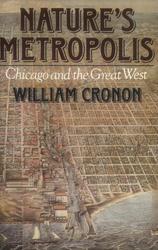
William Cronon, Nature’s Metropolis: Chicago and the Great West —

William Cronon, Nature’s Metropolis: Chicago and the Great West

An old painting of Chicago from a bird's-eye view. Lake Michigan is in the near field, and the grid runs off into the distance. The Chicago River cuts the city top to bottom. Somewhere, a child cries.
I spent two hours on Sunday trying to explain what makes this book as amazing as it is. I failed. I will try again soon. Until then, I’d just strongly advise you to go read it. It’s one of the few best books that I’ve read in the last five years. And it’s not at the top of the list only because I’ve read books like The Power Broker and Common Ground that are such landmarks. It’s definitely in the top five, though. So please, go read it.

(Current events coincidence: Cronon has been in the news lately for his investigations into the Republican legislation machine. I happened to read Cronon’s book on Krugman’s few-months-old suggestion, but otherwise this is just a coincidence.)

There is no Social Security crisis — March 18, 2011

There is no Social Security crisis

Repeat after me: there is no Social Security crisis. Ladies and gentlemen, let’s turn the microphone over to the Congressional Budget Office from July of last year:

CBO estimates the 75 year actuarial balance to be -0.6 percent of gross domestic product (GDP); that is, under current law, the resources dedicated to financing the program over the next 75 years fall short of the benefits that will be owed to beneficiaries by about 0.6 percent of GDP. That figure is the amount by which the Social Security payroll tax would have to be raised or scheduled benefits reduced for the systems revenues to be sufficient to cover scheduled benefits. In other words, to bring the program into actuarial balance over the 75 years, payroll taxes would have to be increased immediately by 0.6 percent of GDP and kept at that higher rate, or scheduled benefits would have to be reduced by an equivalent amount, or some combination of those changes and others would have to be implemented.

Once the temporary Social Security tax reduction goes away, we’ll be back to 7.65% for OASDI + Medicare Part A. So what the CBO is telling us is that we could increase the tax from 7.65% to 8.25% immediately and solve the problem for the next 75 years.

CBO also lays out some policy options, and how much of the 0.6%-of-GDP gap each of them would close. One option is to eliminate the cap on the Social Security payroll tax, so that income above $106,800 would also pay the 6.2% OASDI tax. If we did this, the 0.6% gap would close by … wait for it … 0.6%. (See the chart on page xi.)

Now then. You typically hear it said that people will have to work longer in order to close the gap. “Working longer” means “delaying when people can receive Social Security retirement benefits,” which in turn (because people have finite lives) means “decreasing the total amount that people will receive in retirement benefits over their lives.” That’s the whole point: make them work longer so that Social Security pays out less.

Since Social Security is the major source of income for a large fraction of Americans (I’ll find a citation for that; I just saw it cited the other day), and it’s not the major source of income for wealthy people, “increasing the retirement age” is another way of saying “decreasing benefits for the poor and middle-income Americans.” The CBO says that doing this would close about half the gap. (See the same chart on page xi.)

On the other side, we could tax higher-income earners. Taxing income above $107,000 would affect approximately the top 13% of tax returns, and would solve the entire Social Security “problem” in one fell swoop.

So, to review, two available options are

  • increase the retirement age, which, virtually by definition, is equivalent to cutting benefits for poor and middle-income earners, and would solve half the problem.

  • remove the cap on Social Security taxes, which would affect the top 13% of tax returns and solve the entire problem.

Please keep this in mind whenever you hear some Very Serious Person intone that we’ll all need to tighten our belts and work longer to keep Social Security afloat.

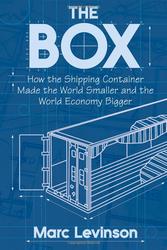
Marc Levinson, The Box: How The Shipping Container Made The World Smaller And The World Economy Bigger — March 13, 2011

Marc Levinson, The Box: How The Shipping Container Made The World Smaller And The World Economy Bigger

Cover of _The Box_: blueprint of a shipping container.
(Attention conservation notice: 2100 words about a book that will make you jealous: The Box is a terrific read about shipping containers, of all things. It’s like if you spent every day using your Honda Civic’s gear shift, then one day found that someone had written The Lowly Honda Civic Gear Shift and How It Will Change Everything and made millions off it. “I should have written that!” you say. But you didn’t write it. Marc Levinson did, and he did it better than you (or I) would. He did it incredibly well, in fact.)

Why do cities form where they do? Why do they grow to the sizes they do? One popular answer has to do with companies’ desire to be near their customers and near their suppliers. Much of Krugman et al.’s magnum opus, for instance, is based around this idea. The idea, in turn, depends critically upon transportation costs. Imagine instead that you could get products to your customers, and components from your suppliers, via a teleportation machine that magically conveyed them at no cost to you. Would you still need to locate your company near your customers? It seems unlikely. You might still put your company near where your suppliers are, so that you could draw on a pool of specialized talent when it came time to hire. But that teleportation machine would radically change your business.

We may have arrived at the teleportation era. As Glaeser and Kohlhase put it, “it is better to assume that moving goods is essentially costless than to assume that moving goods is an important component of the production process.”

Imagine the steps involved in moving a dishwasher from Maytag in Newton, Iowa to somewhere in the French countryside 40 to 50 years ago. It might be loaded on a train in Iowa, conveyed to the Port of New York, unloaded from the train by a burly longshoreman, loaded onto a ship, carried across the ocean, unloaded by another burly longshoreman on the Brittany coast, loaded manually into a train, brought to a major French city, then loaded onto a truck and brought to the countryside. Maytag would typically hire a cargo-forwarding company to handle all these details. The shipping costs in many cases were a double-digit percentage of the final cost of the product.

One of the main reasons why these costs were so high is that the process was so labor-intensive. As Marc Levinson lays out in The Box, stevedores would fit miscellaneous bits of cargo in every available nook and cranny of a ship: bags of coffee alongside televisions alongside containers of solvent. They’d have to be laboriously packed and unpacked whenever the shift from ships to trains or trains to ships or trains to trucks happened. The more-than-occasional crate of whiskey or bag of coffee or box of electronics would go missing.

In retrospect the solution seems obvious: find some way to get machines to do this for us. Put everything in uniform containers. Then get cranes to pull the containers off ships and drop them on the backs of trucks. Cut humans out of the process altogether (apart from operating the cranes). Radically reduce the labor-intensity of the process. Do what capitalism does best: replace humans with machines.

To fully exploit the benefits of the process, there must be standardization, and the standardization must extend from ships to trucks to trains. The more specific rules people must remember (“this 30-foot container has a special coupling to clamp it to a 20-foot container, and of course the 20-foot container must sit atop the 30-foot one …”), the harder it is to scale. With standardization, machines can grab the containers, shift them off trains, shift them onto trucks, and keep moving without thinking. (A.N. Whitehead:
“It is a profoundly erroneous truism, repeated by all copy-books and by eminent people when they are making speeches, that we should cultivate the habit of thinking of what we are doing. The precise opposite is the case. Civilisation advances by extending the number of operations we can perform without thinking about them.”)

How else might we keep pushing costs down? Well, if I’m a shipping company that sends a 20-foot container from Iowa to France, I need that container to come back to me somehow. I could just ask the ship to turn around after it deposits its goods in France and bring empty containers back to me, but that’s a ship that’s making no money — it’s just transporting empty boxes. To make back my costs, I need to charge customers for the outbound trip and the empty-box return trip. If I want to minimize idle shipping time, and thereby lower what I can charge customers, and thereby get more customers, I need to fill up that ship on the way back. This is easier when the trade gap between the two trading countries is near zero. Imagine, instead, that this is a ship traveling from China to L.A. The U.S. current-account deficit to China is quite large, meaning that there’s a lot of stuff coming from China and not a lot going back. So if a ship is going to make the circuit from the U.S. to China, it maybe will want to take a side trip from the U.S. to Japan before returning to China.

To lower prices, we’ll also want to put more boxes on board each boat. But here we run into problems: not all ports can handle monstrous ships carrying thousands of boxes. The Port of New York, as it turns out, was designed for the earlier era when stevedores manually unloaded cargo; they were caught completely unawares by the “containerization revolution.” Elizabeth, New Jersey invested many millions in containerizing their port, and they’re now the busiest port in the United States. New York is history.

Imagine the ships growing larger and larger. As Levinson says at the end of The Box, there will someday soon be ships larger than “Malacca-max,” which is the largest size of ship that can fit through the Strait of Malacca. (Should such a ship ever sink, it would take with it a billion dollars in cargo.) As these ships grow larger, and the cost per ton of goods thereby shrinks, it may become cost-effective to centralize shipping to a single port, say, on the East Coast of the United States, even though the goods would then have to travel a much longer distance by train. Levinson discusses the possibility of building a port on rather remote islands north of Scotland and shipping the goods to London from there; again, all of this becomes possible as the ships become larger.

All is not roses and sunshine and cheap iPhones, however. Throughout The Box, we see the longshoremen’s unions fighting tooth and nail against the mechanization of their jobs. I’ve been unable to find numbers on a quick scan, but Levinson suggests that stevedores have lost their jobs in droves. (What’s unclear to me is whether the increased volume of shipping has made up for decreased per-unit labor costs.)

Now that transportation costs are negligible, manufacturers will choose to locate their factories where labor costs are lowest, rather than locating them, say, in New York or Chicago or L.A. I don’t know enough economics to judge whether this is better for the world overall. It’s certainly brought jobs to China, whose suffering throughout the 20th century was the stuff of legend (“Finish what’s on your plate; there are kids starving in China.”)

As Karl Polanyi taught us, mechanization of everything is part and parcel of capitalism, and it is always and everywhere destructive. This may be “creative destruction,” as Joseph Alois Schumpeter put it, but it’s destruction nonetheless, and every capitalist society has done what it could to slow that destruction. I say “slow,” not “stop,” because it’s likely impossible to slow technological adoption. Stevedores seemed to know that they were eventually going to be automated out of jobs, so they negotiated contracts wherein shipping companies paid some of their savings from containerization into a fund for their employees. In the long term, I don’t know how well this worked out for stevedores — how many of them got help transitioning into new jobs, versus how many became decided to leave the labor force early, versus how many took jobs as supermarket checkout clerks because that was the best job they could find given their age and skill set. This mechanization of jobs happens continuously under capitalism, and we can expect it to continue. Librarians may lose their jobs because of Google and e-books; secretaries may lose them because of Microsoft Word and email. Many of these people have spent their lives doing exactly what we teach them that they’re supposed to do: train to become experts at their jobs and spend a lifetime working hard to gain mastery. They reach age 50 or 55, they get automated out of a job, and now what? A just society helps them either transition with dignity to a new job, or, when that seems impossible (for instance, because they’re too old to retrain), it helps them retire with a decent pension. And a decent society provides a high level of general education to everyone, so that it’s easier to transition from one job to another.

You could imagine a fantasy scenario wherein a perfectly rational, perfect omniscient corporation sees, 40 years in advance, that its business model is going to be rendered irrelevant. Better yet, corporations as a whole might, after centuries of watching the same pattern over and over, see that creative destruction is entirely predictable, and they might plan for it to protect their employees. But you can also very easily imagine the opposite (e.g., companies increasingly don’t expect their employees to stick around for more than five years, so there’s an equilibrium wherein companies don’t invest in their employees for the long term). And the opposite is much easier to imagine than the fantasy. Long story short, I don’t see any institution other than the government that’s in a position to guarantee workers job security or a dignified retirement. And given the GOP’s perennial desire to gut Social Security, I have my doubts even that the government is in a reliable position here.

Another classic capitalist pattern is the race to the bottom among state and national governments, and we see it in the shipping context as well. Ports invest millions and billions of dollars to accommodate larger and larger boats, and they take on the risk that no one will use them — or that some other port, likewise investing billions, will steal away all their business. As soon as it’s economically sensible for a shipping company to move to a cheaper port somewhere further down the coast, it will do so, leaving billions of dollars of wasted port investment.

There’s a concern, when reading a book like The Box, that you’ll get a monomaniacal focus on one single cause: that the author, having spent a decade researching shipping containers, will attribute everything in the modern world to that one cause. The big questions we’d want to ask are:

  • how much international trade moves by ship?
  • how much has the cost of final goods declined because the costs of shipping declined? How much has the cost of final goods declined for other reasons (like, for instance, because cheap manufacturing labor has become available in China)?
  • how much did it cost for a given parcel to move, door-to-door, before and after the containerization revolution?
  • how much did the increase in international trade have to do with containerization, and how much had to do with the rise of the Asian Tigers?

Levinson is not really in a position to answer these questions, both because they’re not his book’s focus and because the data aren’t available to answer many of them. It turns out to be hard to count total shipping costs, door to door, when large companies often got under-the-table discounts for bulk shipments. Levinson’s focus on containers sometimes makes him credit them when other causes seem just as likely — for instance, his assertion that Korean exports trebled thanks to the containerization of their ports. It seems just as likely to me that the rapid rise of the Korean economy, the Korean government’s support for domestic manufacturers (particularly export industries?), and massive capital investments had a lot to do with the rise of Korean exports. I don’t know one way or the other, but Levinson doesn’t address these other possibilities; his book leaves little room for that.

The Box is a terrific book indeed, and I think in no small part that’s because of his monomania. It’s a tautly told tale about the men who built up their container businesses before the world even knew that standardization would change everything, and at the same time it presents a flood of data in a highly readable way. It’s one of the few books I’ve read that manages to tell a good story and deliver data well. You’ll love it.
Some probably obvious observations on economics, inspired by Apple, which just suggest that I need to read more economics — March 5, 2011

Some probably obvious observations on economics, inspired by Apple, which just suggest that I need to read more economics

(Attention conservation notice: 1400 words thinking aloud about innovation, Apple-style, and what connection it might have to the standard, boring sort of competition that you read about in introductory economics.)

I’ve become somewhat obsessed with Apple in recent months (see “The iPhone is a gateway Apple product”). They’re an easy company to get obsessed over, because they build the best products. When Google was building the best products, like their search engine or the maps app, I was obsessed with them too. Most of their other products are quite good, but they’re not perfect in the way that the iPhone is, in the way that the Google search app is, or in the way that Google Maps is. Every time I use Google Calendar — and I use it, mind you, a dozen times a day — I’m reminded of all the things it could do better. I never think that about Google search or about the iPhone. They are perfect.

It’s been remarkable to watch Apple’s competitors. Apple invented the iPod 10 years ago, and it has owned the category ever since. Others have tried to compete with them, but haven’t managed to produce anything even comparably good. Likewise with the iPhone. When I remember what preceded the iPhone, my mind is kind of blown. Pre-iPhone phones were thought to be such poor computers that manufacturers decided to invent their own alternate universe, including their own poor substitute for HTML, rather than just put a fast computer in your pocket. Other companies have had four years to respond, including at least one company that makes a lot of money and should, by all rights, have beaten Apple at this game.

Yet they’ve not. Not even close. Android continues to be the technology of tomorrow, just as Linux has always been, and one strains not to say that it will always will be the technology of tomorrow.

I see in this the simplified picture of markets that we read about in introductory economics. Someone starts a company — say, a bakery making artisanal bread in a big city. There’s unmet demand for this bread, so people flock to it. The lines run out the door, and the bakery is habitually sold out by noon. They ramp up their production and add some machines to augment human labor. Maybe they raise their prices. Now the lines are shorter (translation: prices have risen, so quantity demanded has decreased), but the bakery’s total amount of income has increased (translation: price elasticity is less than 1). Now the bakery is making lots of profit.

Other bakeries see this profit, and they want in. So they move into the market and try to do the same thing more cheaply. Maybe doing it more cheaply is harder, because the incumbent bakery makes its artisanal bread using giant machines that can produce individual loaves for not very much money at all (translation: high fixed cost to buy the machines, low marginal cost per loaf). Anyone who wants to move into the market would either have to make better bread for the same or higher price (think of Starbucks moving into a world of Maxwell House), or make equal-quality bread more cheaply. (Translation: high fixed costs are a barrier to entry, and make monopolies more likely.)

But if the incumbent baker makes money consistently for years, it may eventually happen that banks take notice and loan someone the money to start a competing bakery at scale. (Imagine here AMD moving into a world dominated by Intel.) Now the incumbent has to lower its prices. In some perfect-competition models, every last customer flocks to the cheaper bakery. The bakeries alternate investing huge amounts of capital to produce at cheaper prices at larger scale. We’re in a price war.

This may be a good thing — we get cheaper bread — but it’s not what Apple is doing. Instead, they’re innovating. They’re not running down the slippery slope of a price war. Instead, they’re making products that no one had and no one knew they wanted before. (I still don’t really need an iPad, though it would be handy for reading academic PDFs.) If they were a different kind of company, they could instead try to make cheaper widgets than their competitors, but where’s the joy in that? If that’s how companies operated, we wouldn’t even have BlackBerrys by now; we’d just have cheaper little knock-off LG or Nokia “feature phones.”

There are some models I remember learning in college that tried to capture this. They usually fall under the labels ‘imperfect competition’ or ‘monopolistic competition’. Coca-Cola has a legally enforced monopoly on the term ‘Coca-Cola’, for instance. But that doesn’t really capture innovation. Most of the models I remember learning, and nearly anything captured under the term ‘perfect competition’, don’t describe the sort of market where companies innovate.

I still need to finish reading Schumpeter’s Capitalism, Socialism, and Democracy, but he touches on a similar idea in there. His famous term from that book is “creative destruction”: capitalism’s great contribution to the world is that it constantly destroys industries and replaces them with new ones. No one laments all the horse-and-buggy drivers put out of business by the automobile. There are legitimate reasons to lament the end of businesses built around physical newspapers, and a just society will try to help laid-off newspaper workers land on their feet. But the innovation of the web, which gave rise to an entirely new industry that caught incumbents unawares, makes life better in many well-known ways.

One of Schumpeter’s main arguments (the book contains many arguments and ranges far afield; it argues, for instance, that soon capitalism will be destroyed when its large corporations turn into mere offices for the filling out of forms in triplicate) is that capitalist enterprises shouldn’t mainly fear that a new competitor will produce the same product for cheaper, but rather that an entire industry will come into being that renders the incumbents’ whole reason for being moot.

There’s an “innovation through cheapness” argument along these lines, most famously laid out in The Innovator’s Dilemma. It goes like this: there’s some incumbent that makes a big, expensive product that’s the cream of the crop and whose lead seems impregnable. Think of Oracle databases, for instance, or the Sabre airline-reservation system, or Microsoft Windows. Some cheap competitor comes along, producing a product that doesn’t do most of what the big guys do, but does it for much less money (MySQL databases, Internet airfare searching, Linux). Initially, the big guy couldn’t care less about the newcomer — might not even notice the newcomer, in fact. The newcomer may have in fact taken away the big guy’s most annoying customers: those customers who care mostly about price, or those who demand a lot of features for not a lot of money. Good riddance, says the big guy.

Now that the newcomer has some customers, it can start adding features. Because the big guy has been around for a while, competitors have had a while to look at what customers are buying. The newcomer can bring fresh eyes to an existing market, too: the big guy has established sales forces that are trained at selling a specific kind of product, has a large bureaucracy that’s specialized in making their current product lines, and is slow to move in response to change. The newcomer is small and can be more agile. They keep adding features and taking away increasingly important customers from the big guy.

Eventually the big guy takes notice, but by this point it’s too late: the world has shifted entirely to the fresh, cheap product that the new guy is making. This hasn’t happened yet with Windows, of course. Oracle bought MySQL. A quick scan suggests only modest declines in travel-agent employment over the next 7 years. I should try to think of some other examples.

That’s at least two distinct types of innovation: innovating through inventing entirely new product lines that render existing products moot, and innovating through producing simplified subsets of existing products. The latter seems different than merely making a lower-cost version of the same product; that’s classic price competition.

Now, I’m pretty sure I never heard any coverage of innovation when I took economics classes in college. Is there any good modeling of this sort of thing?

George Will thinks high-speed trains are a collectivist plot to control your brain — March 2, 2011

George Will thinks high-speed trains are a collectivist plot to control your brain

See Grist, Krugman, Yglesias. The money quote:

So why is America’s “win the future” administration so fixated on railroads, a technology that was the future two centuries ago? Because progressivism’s aim is the modification of (other people’s) behavior.

Forever seeking Archimedean levers for prying the world in directions they prefer, progressives say they embrace high-speed rail for many reasons — to improve the climate, increase competitiveness, enhance national security, reduce congestion, and rationalize land use. The length of the list of reasons, and the flimsiness of each, points to this conclusion: the real reason for progressives’ passion for trains is their goal of diminishing Americans’ individualism in order to make them more amenable to collectivism.

There are many obvious things to say about this, and many good things that the esteemed gentlemen above have written. Here’s what I’ll add: the problem with cars is that they offer the illusion of freedom even while they demonstrate collective insanity. They are a perfect illustration of what can go wrong in markets.

Obvious observation: what does a traffic jam have to do with freedom? You and a few hundred of your closest friends, each in your automobile, are each enjoying your own freedom, sitting in traffic for hours at a time. I hope you enjoy that freedom.

The point that Yglesias has been making forever is that, if we watched a video of Soviet citizens lining up for their free bread, the shelves empty and the lines stretching for blocks, we would know right away what the problem is: the price of bread has been set incorrectly. We see — we live! — traffic jams and we don’t immediately think, “pricing problem,” when that’s precisely what we should think.

Driving imposes costs on others around us. Think of your decision to drive into Manhattan at rush hour: your extra car makes traffic just a little bit worse for everyone around you. In particular, one fellow estimates that each additional car on a weekday imposes a total of more than 3 hours of delays on everyone else.

From here, George Will then has two options available: either 1) insist that car drivers be made to pay the full cost of their effects on those around them, both in terms of ecological damage (the smoke that belches into the atmosphere while you’re idling in traffic) and in terms of time wasted by others, or 2) somehow insist that people have a right to impose costs on others for free.

Republicans’ habitual support for option 2) has mystified Yglesias for a long time. By what libertarian theory do people have a right not to pay for the damage that they cause?

One potential response is that we cannot trust the state to properly estimate the damage we cause others. And even assuming we can trust the state to do that, we cannot trust it to tax the people properly. Maybe the state will have every incentive to overtax, for instance. Or maybe the state will cater to certain interest groups: focus on the needs of train riders or car drivers to the exclusion of everyone else, for instance.

That’s just the point: the state already massively favors car drivers, for the reasons listed in my review of Triumph of the City. If George Will wants to get into a debate about the proper role of the state, I’d be happy to do that; but his first step will have to be answering the question: do people have a right to cause harm to those around them without paying for it? His second step will have to be to admit that the state already plays a massive role in Americans’ use of automobiles. The first is a principle that I hope everyone can agree on; the second is a blindingly obvious observation about the world around us. If he’s not willing to do these things, then it’s not a good-faith debate.

It’s perfectly legitimate to ask why we should want state involvement in transportation policy at all, given what a hash the government has made of things already. Gas taxes are perennially off the table, because politicians expect that they won’t sell; why should we expect that the government will ever properly tax people for the damage they do to the people and environment around them?

Again, this is a fine, legitimate question, and I’d be glad to discuss this with George Will. In particular, I’m more than willing to ask him if he has a free-market solution to the problem of people imposing costs on those around them. If there is such a solution, I’d love to hear it. But Will should know that the idea of taxing people for the damage they cause has been utterly mainstream in economics since the early part of the 20th century.

It feels a little silly to treat Will’s ideas with this sort of respect, and to invite him into a polite debate. Will’s job is to carry water for the Republican Party. He wears a bowtie and has a Ph.D. in political science; he’s the intellectually respectable face of the party, even when what he writes (as in this case) is utter garbage. I’m not going to be intellectually generous or gracious to Will; for whatever reason, he’s chosen not to offer that kind of generosity to my side.

To the contrary. What I’m arguing is that, if we actually had a fair debate, Will would be forced — this is not controversial in the least — to start from some premises about state intervention that he would hate. State intervention in the market is inevitable, if people are going to pay for the messes they make. Will wants that, doesn’t he?

Edward Glaeser, Triumph of the City: How Our Greatest Invention Makes Us Richer, Smarter, Greener, Healthier, and Happier — February 26, 2011

Edward Glaeser, Triumph of the City: How Our Greatest Invention Makes Us Richer, Smarter, Greener, Healthier, and Happier

A view of Chicago from the air, only some of the buildings have been hyper-stretched so that they're very large indeed.

It took me a while to understand why an economist was exactly the right person to write this book. It’s not that economists are the only people who can understand certain busted aspects of how the government subsidizes places to live; lots of people think about that. Hardly a week goes by, for instance, when Matt Yglesias doesn’t mention the insanity of American land-use policy. Rather, it’s that economists are specially trained to spot cases when what we think we’re doing is exactly the opposite of what we’re actually doing. And they’re trained to look at that sort of reversal in the context of large groups of people.

Take, for instance, everyone’s desire to live in bucolic wilderness. Everyone heads out to be among the trees in, say, Long Island. (Read Caro’s The Power Broker to hear what Long Island was like before Robert Moses made it what we know and don’t really love.) Soon enough there are highways leading out to where everyone wants to go. Soon after that, Dunkin’ Donutses and Fuddruckerses form along the highways that cater to the automobiles that brought people to their bucolic paradise. And by this point Long Island is no longer bucolic. The end.

That’s a commonplace sort of observation in the crowds I travel in: those desiring suburban living, away from the grittiness of the city, destroy the thing they were chasing. Observations like it are lurking beneath most of Triumph of the City, and at the start I found it a bit of a yawn for that reason. Surely everyone already knows this.

But everyone doesn’t already know this, and I don’t know many popular books that make the point. It would be better if everyone did know this. A harsher, more-direct way to put the point is that those who live in the supposedly dirty city among the asphalt and concrete are the real environmentalists; those driving their cars off into the hinterlands to find nature are thereby destroying it.

This sort of paradox of individual behavior leading to collective destruction is the stock-in-trade of economists, and Glaeser deploys many arguments of this sort. The most surprising, for me, was Glaeser’s observation that environmental-impact statements are flawed because they’re not wide-ranging enough: when a building gets rejected in temperate San Francisco Bay, whose residents drive relatively little and rarely need to use heating or air conditioning, that building will eventually get built — in a different, less-green city, like Vegas or Houston or Phoenix, that has more-flexible land-use policies. Which is to say that good regulation needs to focus not only on the immediate environmental devastation (or ruined lines of sight from nearby small buildings, say), but on the big economic picture. Rejecting a building because of its environmental impact may, again paradoxically, be worse for the global environment than allowing it.

The other main reason you want an economist to look at housing problems is that those problems are fundamentally about supply and demand. If you think it’s too expensive for a middle-class person to own a house in Boston (which it is), you need to increase the supply of houses. Raising supply, for a given level of demand, means lower prices. But cities like Boston and New York are basically full: there are no more parcels of land to build on. So the only option to increase supply is to build up rather than out. In many cases this will mean demolishing an old building that has some historical appeal for those around it, and replacing it with a taller building that houses more people. But as the decades have gone along, Glaeser tells us, regulation has made it harder and harder for cities to modify old neighborhoods. The inevitable outcome is that supply doesn’t increase as rapidly as demand, and housing prices rise. When housing prices rise, many people decide they’d rather live somewhere where they can own a bit of land without sacrificing their firstborn children. And the Sun Belt boom is born.

People do continue to move into Boston and New York City. The combined population of Middlesex and Suffolk counties in Massachusetts — containing two of the Commonwealth’s two most populous cities and many of Boston’s suburbs — rose by a healthy 4.7% from 2000 to 2009. People moved here despite the high home prices, because cities offer them something they can’t get anywhere else: dynamism and excitement that can only come from putting a lot of people near one another and watching the combustion that results.

That’s Glaeser’s central argument: that there is fundamentally no replacement for cities, because no other institution humanity has constructed is as good at harnessing our creative energies. The world continues to urbanize, and all indications are that the pace of urbanization will only increase as China and India move to their great cities. In many cases (think of Rio’s favelas) they crowd into slums, and that may look terrible to us, but they’re moving into seemingly terrible slums because the rural lifestyle they’re leaving was so much worse. People’s own behavior indicates that urban life, for all its gritty lack of charm, is humanity’s best hope for a better life.

When does people’s own behavior not reflect their natural evaluation of what’s best for them? When government policy shifts their choices in a different direction, and when the prices they pay for their choices don’t reflect the true social cost of those choices. Americans live in the suburbs, for instance, for some natural reasons and some less-natural ones. Among the natural ones: schools are often better in the suburbs, their kids have a bit of lawn to play on, and homes are cheaper. Among the less-natural ones: the government subsidizes the Interstate Highway System, and encourages (via the mortgage-interest deduction) homeownership over renting.

Plus the price we pay for gas doesn’t cover the damage we do when we belch smoke into the atmosphere. Glaeser tosses out some numbers toward the end of Triumph of the City suggesting that American gas taxes ($1 or so per gallon) don’t nearly cover the social cost of burning gasoline, while European taxes (averaging $2.30 per gallon) may be too high.

(I’d want to read the research backing this. A lot depends upon how you model the environmental cost of a pound of carbon. If the greenhouse effect’s response to an additional pound of atmospheric carbon is highly nonlinear — if we eventually cross a point of no return — then this would strongly encourage us to stay away from that point. If, instead, the response is very smooth — if increasing carbon by a little increases damage by a little — then that would seem to make policymaking somewhat easier. Or rather, would make the required policies less drastic.

We should add another important angle to this, namely how our policies should react in the face of our ignorance. What if our models of how the greenhouse effect responds to an additional pound of carbon are wrong? If the atmosphere is more fragile than our models predict, then undertaxing carbon is really, really bad. If the atmosphere is less fragile, on the other hand, is it really so bad to overtax carbon? This isn’t just technical noodling: if the point is to charge people the actual cost of the pollution they’re causing, you’d better figure out what “actual cost” means.

Triumph of the City doesn’t pursue this sort of direction. The book as it stands is about lightly exercising our intuitions about cities to lead us to surprising conclusions. It’s not about running off into the weeds with technical details. If you want those, the book is very well-footnoted.)

If anything, Glaeser is too conservative in his lambasting of American anti-urban policy. The true cost of gasoline includes the cost of invading foreign countries whenever our supply of oil is threatened. And surely those who buy and sell crude-oil futures know that the supply of Middle East oil is unlikely to drop so long as the U.S. government stands ready to secure it with guns. So a true accounting of the price of oil would include much of the cost of maintaining the U.S. military even in peacetime.

Glaeser doesn’t mention this sort of detail. It must be because he’s aiming his book at people quite unlike me — people who are starting from an anti-urbanist background. The main battleground he’s chronicling in Triumph of the City is urban v. rural rather than urban v. suburban. In part that’s to avoid charges of hypocrisy: to get better schools and a lawn, he and his wife and kids moved a few years back to MetroWest, while he continues to commute into Cambridge via Interstate 90 to work at Harvard.

That commute indicates probably the more important reason that Glaeser doesn’t hate suburbs: the suburb is still within reach of the city, and therefore makes it part of the engine of economic dynamism that he lauds. People are still near enough that they can sit down face to face (after a short drive, perhaps) and build the great works that cities produce. The point is human interaction, which is not available to nearly the same extent within rural areas.

What about the Internet, then? Doesn’t the Internet make physical proximity obsolete? This is clearly the major difficulty that Glaeser is going to encounter with his thesis, and I don’t think he really resolves it. He asserts that the Internet makes person-to-person interaction more valuable, and that certain work just needs a handshake and two people sitting together hashing something out. I certainly agree, but this doesn’t have the same rigorous economic grounding that he brings to the rest of his book.

The bulk of the book is organized around some axioms of economic thinking. Let people choose whatever they want to choose — if they want to live in suburbs, fine; if they want to live in cities, fine — but make them pay for their choices. Let the supply of housing rise to meet its demand. And bring some economic discipline to the way we educate our kids: let poor schools fail, let poor teachers lose their jobs, and let great teachers be paid well. With the market allowed to work the way it should, Glaeser has no doubt that cities will continue to be vibrant centers of innovation. If you’d like a rather breezy yet informative take on cities, Triumph of the City is a good use of a few hours of your time.